
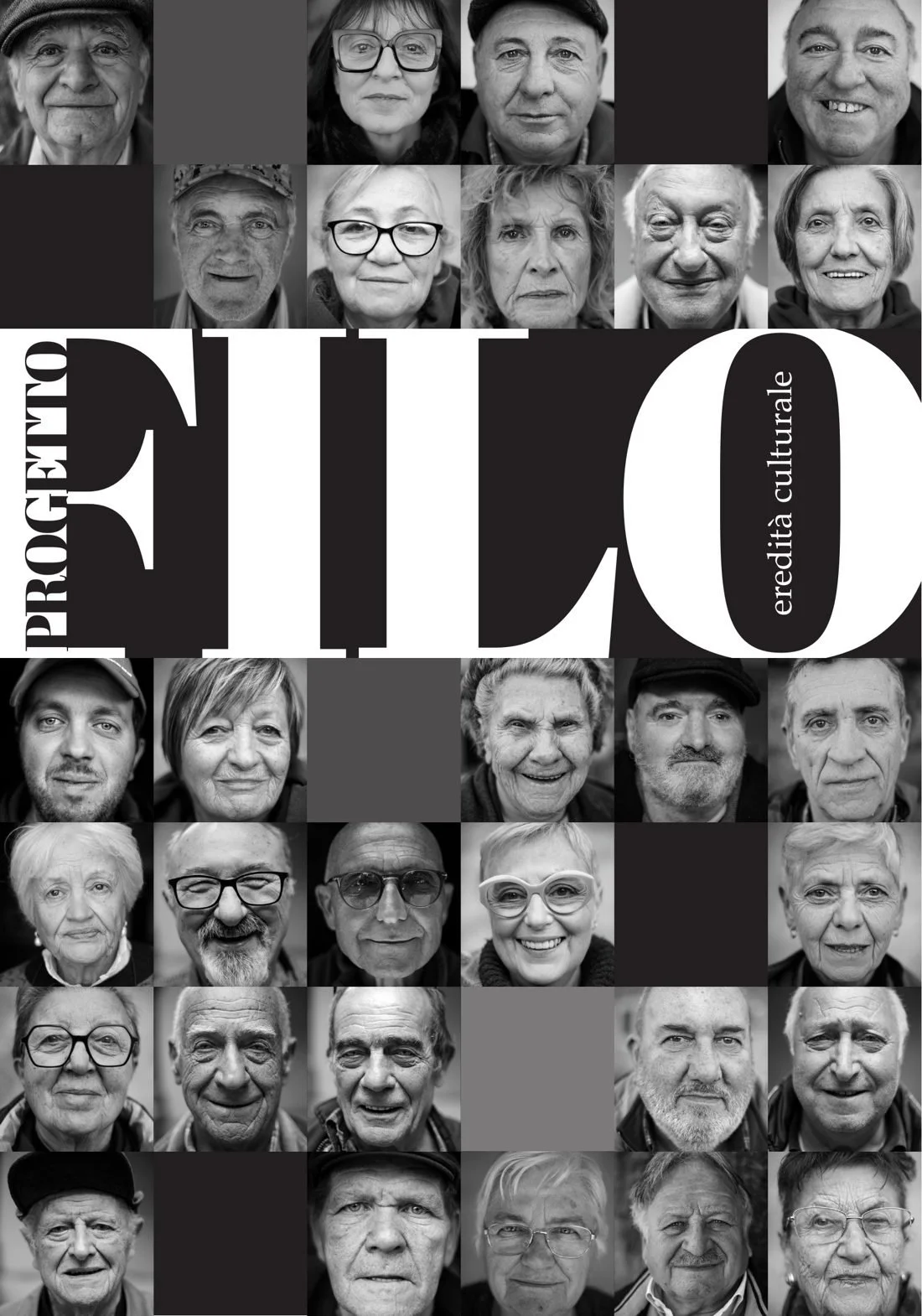
FILO
The cultural heritage of a territory
Friends of Potentino presents the FILO Project, by Erika Comina.
The first volume, Progetto FILO Eredità Culturale, is available from potentino.com.
Introduction
FILO (‘thread’ in Italian) was born as a project in the Seggiano (Grosseto province) area to keep a historical, geographical and territorial memory alive. FILO is the cultural heritage of a continuously evolving territory that wants to maintain the memory of what has been, so that the present can keep the traditions, uses and customs of the past alive. This legacy is still to be seen in the streets and country lanes, in the fields, in the vineyards and in the olive groves. It stops time in the stories of people who wish to pass on knowledge and memories.
The project focused on the towns and villages that surround the Potentino Valley, a place whose history, biodiversity and ecology are unique. It is a special place that Castello di Potentino, supported by professionals, is already studying across various academic disciplines. The valley is the agricultural basin of the area and modern agriculture has had little impact. Many vestiges of traditional agriculture still survive there.
What is FILO
FILO is the thread that keeps the past linked to the present, where memory ties together and creates trajectories, roads to follow, places to return to.
FILO is a trend, a trace, a canvas.
It is the action of weaving memories linked to the territory.
The project
The project was based on interviews.
We identified a group of people of various ages living in the villages around the valley, whose families had land in the Seggiano valley or who remembered how the land was worked, and we let them talk about it.
The protagonists were guided by a questionnaire made up of a series of questions ranging across different topics: land, water, agriculture, work, rituals, music, life, family, curiosities of the past and many others.
The narrative and the mosaic of stories that intertwined fed into the writing of a book. The protagonists were interviewed and video recorded to produce a documentary record, and the interviews were transcribed and translated into English.
The aim
The intention was to examine the traditions of the area in a historical perspective, thanks to the stories of the participants who moved through the memory of a place during group interaction.
To focus on cultural heritage.
The interviews
People interviewed
Small groups of men and women from each of the communities involved, mostly from the older generations. Participants were not anonymous: they signed a waiver to take part and to be filmed on video.
Meetings
The guiding principle was not to interrupt the interviews but to let them flow, giving each conversation the time it needed.
Place
Meetings were held in welcoming, quiet places chosen with the participants, where each group felt at ease, at times that were suitable and easy for everyone.
Topics covered in the interviews
Agriculture, rural life and work
Land, fields, roads and country lanes
Water and management systems in the agricultural community, sharing irrigation
Work sharing, barter and alternative economic systems
Sharecropping
Family and community
Women and men: equality and fairness
Habits
Good neighbourliness
Charity
Thematic views
Education: literacy and school
Medicine: health and care, birth and death, diseases and natural remedies
Food, cooking and nutrition
Transport
FILO: the thread
Memories
Curious facts
Rituals and religion
Music
History
Grandparents
War
Youth
Method
The interviews were captured in video and audio recordings, then transcribed and translated into English, and the project included a photographic record.
The book
The stories and portraits gathered by FILO were published by Potentino Press in 2026 as the first volume of the project, Progetto FILO Eredità Culturale, available from potentino.com.
What comes next
FILO continues. A second volume will extend the project to more villages and communities around the valley, recording new memories and stories, and a photographic exhibition will bring the portraits and stories back to the places they come from.
Become a Friend of Potentino
Friends of Potentino is dedicated to safeguarding the rural cultural heritage and biodiversity of the Seggiano Valley. By supporting our educational programmes, cultural events and sustainable agricultural initiatives, you can help us share this environmentally conscious vision of rural life with a wider audience. We welcome donations from businesses and individuals who share our mission to promote environmental sustainability and community in this unique corner of Tuscany.
Every contribution makes a difference. Support FILO and Friends of Potentino.